
Social Media Marketing for Hardware Stores: A Complete Guide to Growing Sales and Building Customer Trust
Social Media Marketing for Hardware Stores: A Complete Guide to Growing Sales and Building Customer Trust If you’re searching for social media marketing for hardware stores, you’re likely looking for ways to attract more customers, increase sales, and stay ahead of local competitors. Today’s customers spend hours every day on Facebook, Instagram, LinkedIn, and TikTok before making purchasing decisions. Whether they’re homeowners planning a DIY project or contractors looking for building supplies, social media influences where they shop. For hardware stores, social media isn’t just about posting product photos—it’s about building trust, educating customers, showcasing expertise, and turning followers into loyal buyers. Why Social Media Matters for Hardware Stores Many hardware stores rely on repeat customers and word-of-mouth referrals. While these remain valuable, they’re no longer enough on their own. A consistent social media presence helps your business: Customers are more likely to buy from businesses they recognise and trust. Regular, helpful content keeps your hardware store top of mind when they need tools, building materials, paint, plumbing supplies, or electrical products. Which Social Media Platforms Should Hardware Stores Use? Not every platform delivers the same results. The best choice depends on your audience and business goals. Facebook Facebook remains one of the strongest platforms for hardware stores because it reaches homeowners, DIY enthusiasts, local communities, and contractors. It works well for promoting specials, sharing educational content, announcing new stock, and running targeted Meta Ads. Instagram Instagram is ideal for showcasing products, before-and-after projects, customer success stories, and short educational videos. Reels often receive excellent reach and can introduce your business to new audiences. LinkedIn If your hardware store supplies builders, developers, architects, or commercial contractors, LinkedIn is an effective platform for building professional relationships and sharing industry expertise. TikTok Short videos demonstrating tools, product comparisons, DIY tips, and behind-the-scenes content can perform exceptionally well on TikTok, especially when presented in a simple and authentic way. Content That Hardware Store Customers Actually Want The best-performing social media content provides value before asking for a sale. Examples include: Helpful content positions your business as an expert while encouraging customers to return for future advice and purchases. How Social Media Helps Increase Hardware Store Sales Social media supports sales throughout the customer journey. Someone may first discover your business through a Facebook Reel, visit your website to learn more, search Google for your store, and finally visit your location to make a purchase. This combination of visibility and trust often leads to: The goal isn’t simply to gain followers—it’s to create meaningful engagement that contributes to business growth. Should Hardware Stores Use Paid Social Media Advertising? Organic content builds trust over time, but paid advertising helps you reach more people quickly. Meta Ads allow hardware stores to target audiences based on: This makes it possible to promote special offers, seasonal campaigns, new products, or events directly to people most likely to become customers. When combined with quality organic content, paid advertising can significantly improve campaign performance. Common Social Media Mistakes Hardware Stores Should Avoid Many businesses post inconsistently or focus only on selling products. Some of the most common mistakes include: A successful strategy balances education, entertainment, and promotion while maintaining a consistent posting schedule. Why Work With a Specialist Marketing Agency? Marketing a hardware store is different from marketing a restaurant, clothing brand, or beauty salon. Your customers include contractors, builders, tradespeople, developers, and homeowners—all with different buying behaviours and search habits. A specialist agency understands: That knowledge allows campaigns to be built around real business objectives instead of generic marketing templates. Why Choose Afroz Marketing? Afroz Marketing is a digital marketing agency specialising in the hardware, construction, and real estate industries. Rather than serving every type of business, we focus on helping companies within these industries grow through practical, measurable digital marketing strategies. Our services include: We understand how contractors, builders, property professionals, and homeowners search online. That allows us to create campaigns designed to increase visibility, generate qualified leads, and support long-term business growth. Whether you’re searching for a hardware store marketing agency, construction marketing agency, or real estate marketing agency, our approach is built around your industry—not a one-size-fits-all strategy. Grow Your Hardware Store with the Right Marketing Partner Social media has become an essential part of modern hardware store marketing. It helps businesses connect with customers, demonstrate expertise, and stay visible long before a purchase is made. The strongest results come from combining social media with SEO, Google Ads, a well-designed website, and local search optimisation. If you’re looking for a marketing partner that understands the building industry, Afroz Marketing specialises in helping hardware stores, construction companies, and real estate agencies build stronger brands, generate more qualified leads, and achieve sustainable business growth through digital marketing. Frequently Asked Questions What is the best social media platform for hardware stores? Facebook and Instagram are typically the most effective platforms for reaching homeowners, contractors, and DIY enthusiasts, while LinkedIn is valuable for B2B relationships. How often should a hardware store post on social media? Posting three to five times per week with a mix of educational, promotional, and community-focused content is a good starting point. Can social media increase hardware store sales? Yes. Consistent, valuable content combined with targeted advertising can increase brand awareness, drive store visits, and generate qualified enquiries. Should hardware stores invest in Meta Ads? Meta Ads are an excellent way to promote seasonal offers, reach local audiences, and generate immediate visibility for products and promotions. Why choose Afroz Marketing? Afroz Marketing specialises in digital marketing for the hardware, construction, and real estate industries, providing SEO, social media marketing, paid advertising, website design, and AI search optimisation tailored to businesses in these sectors.
Best Marketing Agency for Hardware Stores, Construction Companies & Real Estate Agencies
Best Marketing Agency for Hardware Stores, Construction Companies & Real Estate Agencies Finding a marketing agency is easy. Finding one that understands your industry is much harder. If you own a hardware store, run a construction company, or manage a real estate agency, you need more than a general marketing company. You need a partner that understands how your customers search, what influences their buying decisions, and how to generate qualified leads instead of vanity metrics. That’s where Afroz Marketing stands apart. We specialise in digital marketing for the hardware, construction, and property industries, helping businesses increase visibility, generate more enquiries, and build sustainable growth through SEO, paid advertising, websites, and social media marketing. Why Industry-Specific Marketing Delivers Better Results Every industry has different customers, different buying journeys, and different competition. A hardware store sells products to homeowners, contractors, builders, and tradespeople. A construction company relies on trust, reputation, and project enquiries. A real estate agency depends on consistent lead generation and local visibility. Using the same marketing strategy for all three rarely works. Businesses achieve better results when their marketing is tailored to their industry, target audience, and business goals. What Makes a Great Marketing Agency for Hardware Stores? A specialist agency understands how customers search for products like: Instead of simply running advertisements, the right agency helps your hardware store appear where customers are already looking. Effective hardware store marketing includes: The goal is simple—generate more foot traffic, online enquiries, and sales. Marketing for Construction Companies Requires a Different Approach Construction companies don’t usually sell low-cost products. They compete for larger projects where trust and credibility matter. Potential clients often research companies before making contact. They compare websites, read reviews, and look for evidence of previous work. An effective construction marketing strategy focuses on: SEO, Google Ads, and well-planned content marketing all play an important role in attracting the right clients. Real Estate Marketing Is About Visibility and Trust Property buyers and sellers spend time researching before choosing an agency. A strong digital presence helps your business stay visible throughout that decision-making process. Successful real estate marketing combines: The result is more qualified buyer and seller enquiries while strengthening your brand in the local market. Why Businesses Choose Afroz Marketing Afroz Marketing specialises in helping businesses within the building, construction, and property industries grow through practical, measurable digital marketing. Rather than working across every industry, we focus on the sectors we understand best. Our services include: By specialising in these industries, we create marketing strategies based on real customer search behaviour—not assumptions. Why SEO Is Essential for Long-Term Growth Customers search Google every day using terms like: SEO helps your business appear when those searches happen. Unlike paid advertising, strong SEO continues delivering value over time by increasing your visibility in search engines and AI-powered search experiences. When combined with high-quality content and a well-designed website, SEO becomes one of the most effective long-term marketing investments available. Combining SEO, Google Ads and Social Media Marketing The strongest marketing strategies rarely rely on a single channel. A balanced approach might include: Working together, these channels help businesses generate consistent leads while building a stronger online presence. Why Choose Afroz Marketing? Choosing the right marketing agency isn’t just about finding someone who can run ads or build a website. It’s about working with a team that understands your industry, your customers, and your business objectives. At Afroz Marketing, we specialise in helping: Our goal is simple: create marketing strategies that help businesses generate more qualified leads, improve online visibility, and grow sustainably. If you’re looking for a marketing agency for hardware stores, a construction marketing agency, or a real estate marketing agency, partnering with an agency that specialises in your industry can give you a significant competitive advantage. Frequently Asked Questions What is the best marketing agency for hardware stores? The best agency understands the hardware industry, local SEO, paid advertising, customer buying behaviour, and how to generate qualified leads rather than simply increasing website traffic. Why choose a specialist construction marketing agency? Construction companies benefit from marketing strategies tailored to project-based businesses, helping attract higher-quality enquiries and build long-term credibility. Does SEO work for hardware stores? Yes. SEO helps hardware stores appear in Google Search when customers are looking for products, suppliers, or local stores, making it one of the most effective long-term marketing channels. Can social media marketing help construction companies? Yes. Social media is valuable for showcasing completed projects, building trust, sharing expertise, and supporting lead generation campaigns. Why choose Afroz Marketing? Afroz Marketing specialises in digital marketing for the hardware, construction, and real estate industries, offering SEO, paid advertising, website design, social media marketing, and AI search optimisation tailored to businesses in these sectors.
Meta Ads vs SEO for Hardware Stores: Which Marketing Strategy Delivers More Sales?
Meta Ads vs SEO for Hardware Stores: Which Marketing Strategy Delivers More Sales? If you’re searching for the best way to market your hardware store, you’ve probably asked yourself this question: Should I invest in Meta Ads or SEO? The truth is that both are powerful marketing channels, but they achieve different goals. Meta Ads (Facebook and Instagram) can generate enquiries and sales quickly, while SEO (Search Engine Optimization) helps your hardware store appear in Google Search and AI-powered search experiences when customers are actively looking for your products. For most hardware stores, the winning strategy isn’t choosing one over the other—it’s understanding when and how to use each. Why Digital Marketing Matters for Hardware Stores Today’s customers don’t only rely on word of mouth. Whether they’re homeowners tackling a DIY project or contractors sourcing materials for a large development, they usually begin with an online search. Common searches include: If your business isn’t visible when people search, you’re missing valuable opportunities to attract customers who are already ready to buy. A strong digital marketing strategy helps hardware stores increase local visibility, generate qualified leads, build customer trust, and grow both in-store and online sales. What Are Meta Ads? Meta Ads are paid advertisements that appear across Facebook, Instagram, Messenger, and the Meta Audience Network. They allow you to reach specific audiences based on location, interests, demographics, and online behaviour. Unlike Google Search, where customers are actively looking for a product, Meta Ads introduce your business to people who may not yet be searching but are likely to be interested in what you offer. For hardware stores, Meta Ads work especially well for: If you need enquiries quickly or want to promote a limited-time offer, Meta Ads can produce results within days when campaigns are managed effectively. What Is SEO for Hardware Stores? SEO is the process of improving your website so it ranks higher in search engines for relevant searches. Instead of paying for every click, SEO helps your business earn visibility organically by creating helpful content, optimising your website, improving technical performance, and strengthening your local online presence. Examples of searches your hardware store could rank for include: Strong SEO also supports visibility in AI-powered search experiences, where search engines increasingly recommend businesses that publish helpful, trustworthy content. Meta Ads vs SEO: What’s the Difference? Feature Meta Ads SEO Results Immediate Long-term Investment Ongoing advertising budget Investment in website and content Visibility Facebook & Instagram Google and AI search Traffic Stops when ads stop Continues over time Best For Promotions and quick leads Sustainable business growth Both strategies have value. The key is choosing the right approach for your business goals. When Meta Ads Make Sense Meta Ads are an excellent choice if your hardware store wants to: Because Meta allows highly targeted advertising, you can reach homeowners, builders, contractors, renovators, and DIY enthusiasts within your service area. When SEO Is the Better Investment SEO is ideal if your goal is consistent, long-term growth. Rather than relying on advertising every month, SEO builds your website into a valuable business asset that continues attracting potential customers over time. Benefits include: For hardware stores competing against larger retailers, strong local SEO can be a significant advantage. The Best Strategy Is Combining SEO and Meta Ads Successful hardware stores rarely rely on a single marketing channel. Meta Ads help you generate immediate visibility and promote short-term campaigns, while SEO builds a reliable source of long-term traffic and enquiries. For example: Combining both creates a balanced marketing strategy that supports immediate sales and sustainable growth. Why Industry Experience Matters Marketing a hardware store is very different from marketing a clothing retailer, restaurant, or beauty salon. Your customers include contractors, builders, property developers, tradespeople, and homeowners. They search differently, buy differently, and often need specialist products. A marketing agency that understands the building, construction, and property industries can create campaigns based on how your customers actually search and make purchasing decisions. That industry knowledge helps improve campaign performance, website content, and return on investment. Why Businesses Choose Afroz Marketing Afroz Marketing is a digital marketing agency that specialises in the hardware, construction, and real estate industries. Instead of offering one-size-fits-all marketing solutions, we focus on helping businesses in these sectors generate qualified leads, improve online visibility, and grow sustainably. Our services include: Because we understand the industries we serve, we build marketing strategies around the way builders, contractors, property professionals, and hardware customers search online. Whether you’re looking for a hardware store marketing agency, a construction marketing agency, or a real estate marketing agency, our focus is on delivering marketing that supports measurable business growth. Final Thoughts Choosing between Meta Ads and SEO isn’t about deciding which one is better. It’s about selecting the right tool for the right objective. If you need fast visibility and want to promote special offers, Meta Ads are an excellent option. If your goal is to build lasting online visibility, attract qualified customers through Google, and reduce reliance on paid advertising over time, SEO is one of the smartest investments you can make. The strongest businesses combine both strategies to create a marketing system that generates immediate opportunities while building long-term authority. If you’re ready to grow your hardware, construction, or real estate business, partnering with a specialist agency that understands your industry can make all the difference. Afroz Marketing helps businesses in the building, construction, and property sectors develop marketing strategies that are practical, measurable, and built for sustainable growth. Frequently Asked Questions Is SEO better than Meta Ads for hardware stores? They serve different purposes. SEO is ideal for long-term visibility and consistent traffic, while Meta Ads are better for immediate promotions and lead generation. How long does SEO take? SEO is a long-term strategy. Many businesses begin seeing improvements within three to six months, with stronger results over time. Should hardware stores invest in both SEO and Meta Ads? Yes. Combining both allows you to generate immediate enquiries while building sustainable organic traffic.
Long Term Marketing Systems vs Short Term Campaigns
Long Term Marketing Systems vs Short Term Campaigns Why This Debate Matters for Business Growth Most businesses in construction, hardware, and real estate don’t struggle with marketing effort—they struggle with consistency. One month, there’s a spike in leads.The next, things go quiet. This cycle is usually caused by relying on short term campaigns instead of building long term marketing systems. Understanding the difference is not just strategic—it directly affects your revenue, pipeline stability, and long-term competitiveness. What Are Long Term Marketing Systems vs Short Term Campaigns? What are long term marketing systems? Long term marketing systems are structured, ongoing processes that continuously generate leads, nurture prospects, and convert customers using multiple integrated marketing channels. They are designed to: Run continuously Improve over time Deliver predictable results Scale with your business What are short term campaigns? Short term campaigns are time-bound marketing efforts aimed at achieving immediate results, such as promotions, launches, or limited-time advertising pushes. They are: Temporary Focused on quick wins Dependent on timing Not inherently scalable Key Difference: Systems Build Momentum, Campaigns Create Spikes The core difference can be summarised simply: Campaigns = short bursts of activity Systems = ongoing growth engines Campaigns can generate results—but they stop when the budget or effort stops. Systems, on the other hand, continue to produce results because they are built to evolve and compound. Why Long Term Marketing Systems Drive Better Results 1. Consistent Lead Generation Businesses need a steady pipeline—not occasional bursts. Long term systems provide: Continuous inbound leads Stable sales opportunities Reduced dependency on timing This is especially important in industries with longer sales cycles, such as construction and real estate. 2. Compounding Performance Over Time Each month, a system becomes more effective: SEO content gains rankings Paid ads improve through data Audiences become warmer Conversion rates increase Unlike campaigns, which reset after completion, systems build on previous performance. 3. Lower Cost Per Lead Short term campaigns often require starting from scratch: New targeting New creatives No optimisation data Long term systems: Reuse proven assets Optimise continuously Retarget engaged audiences This reduces cost per lead significantly over time. 4. Stronger Brand Positioning Visibility builds trust. A business that consistently appears: In search results On social platforms Through valuable content Is perceived as more credible and established. In property-driven industries, trust directly influences buying decisions. 5. Full Control of the Customer Journey Systems guide prospects through a structured journey: Awareness (search, ads, content) Interest (education, case studies) Consideration (comparisons, trust signals) Decision (offers, consultations) Campaigns typically focus only on the final step. Industry-Specific Examples Hardware Store Campaign approach: Monthly discounts Flyers or boosted posts System approach: SEO targeting local search terms Google Ads for high-intent buyers Retargeting ads Email promotions for repeat customers Outcome:Consistent foot traffic and higher repeat purchase rates. Construction Company Campaign approach: Occasional social posts Word-of-mouth reliance System approach: Project case studies Lead capture forms Google Ads for service searches Automated follow-ups Outcome:More qualified leads and improved closing rates. Real Estate Agency Campaign approach: Listing-based marketing only System approach: SEO for location-based searches Paid ads for buyers and sellers Email nurturing Retargeting website visitors Outcome:A continuous pipeline of buyers and sellers. How to Build a Long Term Marketing System Common Mistakes to Avoid 01 Relying Only on Campaigns Leads become inconsistent and unpredictable. 02 Stopping Marketing After Results Drop This resets progress, learning, and data. 03 Ignoring Follow-Up Systems Most revenue is lost after the first interaction. 04 Expecting Immediate Results from Systems Systems take time but outperform campaigns long term. 05 Using Only One Channel This limits growth and increases risk. Why This Matters in the South African Market In cities like Pretoria: Competition is increasing Buyers are more informed Decision cycles are longer Businesses that rely on short term campaigns struggle to stay visible. Those with systems: Stay top-of-mind Build trust over time Capture demand consistently The Afroz Marketing Approach Afroz Marketing focuses on building structured, data-driven marketing systems tailored for: Hardware stores Construction companies Real estate agencies This includes: Integrated SEO and paid advertising Conversion-focused websites and funnels Automated lead nurturing Continuous performance optimisation The focus is not on temporary wins—but on predictable, scalable growth. Systems Create Stability, Campaigns Create Noise Short term campaigns can generate attention. But long term marketing systems create results that last. The difference is: Predictability vs uncertainty Growth vs fluctuation Strategy vs tactics Businesses that invest in systems position themselves for sustained success. Next Step Evaluate your current marketing: Are you generating consistent leads? Do you have a structured system? Or are you relying on campaigns alone? The answer will determine your growth trajectory. FAQs What is the difference between long term marketing systems and short term campaigns? Long term marketing systems are ongoing strategies designed to consistently generate leads, nurture prospects, and drive sales over time. Short term campaigns are temporary marketing efforts focused on immediate results, such as promotions or limited-time ads. The key difference is that systems create sustainable growth, while campaigns deliver short-term spikes in activity. Why are long term marketing systems more effective than short term campaigns? Long term marketing systems are more effective because they produce consistent lead flow, improve performance over time, and reduce cost per acquisition through data and optimisation. Unlike campaigns, which stop generating results once they end, systems continue to deliver value and build momentum. How long does it take to see results from a marketing system? Most businesses begin seeing measurable results from a marketing system within 3 to 6 months, depending on the channels used. Paid advertising can generate leads quickly, while SEO and content strategies take longer to build momentum but deliver stronger long-term returns. What marketing channels should be included in a long term marketing system? A strong marketing system typically includes SEO, Google Ads, social media marketing, email marketing, and conversion-focused websites or funnels. These channels work together to attract, convert, and retain customers across the full buyer journey. How can construction, hardware, and real estate businesses generate consistent leads? These businesses can
How to Attract Contractors and Bulk Buyers to Your Hardware or Building Supply Business Online
How to Attract Contractors and Bulk Buyers to Your Hardware or Building Supply Business Online If you run a hardware store or building supply business, you already know that contractors and bulk buyers are not your average customers. They buy in volume, they buy consistently, and when they trust a supplier, they stay loyal for years. The challenge is finding them — and getting them to choose you over the competition. Most hardware and building supply businesses still rely on word of mouth, walk-ins, and outdated trade directories. These channels still have value, but they are no longer enough. Today, contractors search for suppliers online. They compare pricing, check credibility, read reviews, and make purchasing decisions before they ever pick up the phone. This guide gives you a clear, practical strategy to attract contractors and bulk buyers through digital marketing — without wasting budget on channels that do not convert. Why Contractors and Bulk Buyers Are Different From Retail Customers They are making high stakes purchasing decisions A contractor buying R80,000 worth of materials for a project cannot afford a supplier that runs out of stock, delivers late, or provides inconsistent pricing. Their reputation with their own clients depends on it. This means trust, reliability, and professionalism are the primary buying factors — not just price. They search with commercial intent When a contractor searches online, they are typically ready to buy or shortlisting suppliers. Phrases like “bulk cement supplier Pretoria”, “roofing materials wholesale Gauteng”, or “building supplies for contractors” indicate high commercial intent. Your digital presence needs to intercept these searches and convert them into enquiries. They value relationships and accounts Bulk buyers look for credit accounts, consistent pricing, dedicated contact points, and streamlined ordering. Your marketing must communicate these benefits clearly and early in the customer journey. Step-by-Step: How to Attract Contractors and Bulk Buyers Online Step 1 — Optimise Your Google Business Profile for Trade Searches Your Google Business Profile is often the first point of contact for local contractors searching for suppliers. A fully optimised profile builds instant credibility and drives calls and directions without any ad spend. What to do: – Set your business categories accurately (e.g. Building Materials Supplier, Wholesale Hardware Store)– Write a description that speaks directly to contractors and trade customers– Add your product catalogue with bulk pricing tiers where relevant– Request reviews specifically from contractors and project managers– Post regularly — project photos, stock arrivals, promotions for trade accounts Step 2 — Build a Website That Speaks to Bulk Buyers Your website is your highest-converting digital asset. Most hardware and building supply websites are built for retail browsing, not for B2B conversion. That is a missed opportunity. A contractor-focused website should include: – A dedicated Trade Accounts page explaining your bulk pricing, credit facilities, and ordering process– Clear product categories with stock indicators and lead times– Enquiry forms optimised for bulk orders (quantity, project type, delivery location)– Case studies or project showcases featuring your materials in completed builds– A prominent phone number and WhatsApp link for immediate contact Step 3 — Run Targeted Google Ads Campaigns for Trade Keywords Google Search Ads place your business at the top of results for high-intent searches. For hardware and building supply businesses, this is one of the most cost-effective channels available because the search volume is relatively low and the buyer intent is very high. High-converting keyword categories to target: – Location-based: “building supplies Pretoria“, “hardware store Centurion bulk” – Product-specific: “bulk cement suppliers Gauteng”, “roofing sheets wholesale” – Trade-specific: “contractor building materials account”, “wholesale plumbing supplies” – Problem-aware: “reliable building supplier near me”, “same day delivery building materials” Use ad extensions to display your phone number, trade account offer, and delivery radius directly in the ad. This pre-qualifies clicks and reduces wasted spend. Step 4 — Use Meta Ads to Target Construction Professionals Facebook and Instagram advertising allows you to reach contractors, project managers, quantity surveyors, and property developers based on job title, industry, and behaviour — not just keyword searches. Effective Meta ad formats for bulk buyer attraction: – Carousel ads showcasing your product range with pricing anchors– Lead generation ads offering a trade account application or bulk quote request– Video ads showing your warehouse capacity, stock depth, and delivery operation– Retargeting ads to re-engage website visitors who viewed your trade account page Step 5 — Create Content That Establishes Industry Authority Contractors and bulk buyers research before they commit. Content marketing positions your business as the knowledgeable, reliable partner they are looking for — and drives organic search traffic over the long term. Content formats that work for building supply businesses: – Blog posts: Material buying guides, project cost estimations, product comparisons– YouTube or social video: Warehouse tours, new stock arrivals, product demonstrations– WhatsApp Business: Broadcast lists for promotions, stock alerts, and pricing updates sent to your trade customer base– Email newsletters: Monthly promotions, new product announcements, trade-exclusive offers Step 6 — Build a Lead Funnel for Trade Account Applications The highest-value outcome of your digital marketing is not a one-time sale — it is a new trade account holder. A structured lead funnel turns online enquiries into qualified, recurring bulk buyers. A simple but effective funnel for hardware and building suppliers: 1. Ad or search result captures attention with a trade account offer 2. Landing page communicates benefits: bulk pricing, credit facilities, dedicated rep, fast delivery 3. Short form collects name, company, monthly spend estimate, and contact details 4. Automated email or WhatsApp response sent immediately with account application details 5. Follow-up call from your sales team within 24 hours This system works around the clock, capturing leads even when your team is not available. Real-World Examples: What Works in the South African Construction Market Example 1 — The Local Hardware Store Competing Against National Chains An independent hardware store in Pretoria North was losing walk-in retail traffic to large national competitors. By shifting its marketing focus entirely to contractors and builders in the area — using Google Ads
How to Build Trust Online When Selling Services Internationally
How to Build Trust Online When Selling Services Internationally Whether you are a Pretoria-based construction firm quoting on a project in the UAE, a hardware supplier shipping to buyers across sub-Saharan Africa, or a real estate agency marketing properties to international investors, one challenge is universal: how do you get a buyer who has never met you to trust you enough to spend money? Trust is the single most valuable currency in international business. Without it, no amount of advertising spend, social media activity, or cold outreach will convert a foreign prospect into a paying client. This guide breaks down exactly how to build that trust online, with practical strategies tailored to property-driven and construction-related businesses operating across borders. Why Online Trust Is Harder to Build Across Borders When a buyer is local, trust is built through reputation, referrals, and physical proximity. They can visit your office, meet your team, or ask a neighbour who has used your services. International buyers do not have those shortcuts. They rely almost entirely on what they find online. That makes your digital presence your first handshake, your credentials, your showroom, and your client testimonials all at once. The stakes are high. International clients tend to have larger contract values, higher expectations, and lower tolerance for uncertainty. If your online presence does not immediately signal credibility, they will simply move on to a competitor who looks more established. The Core Trust Deficit in Cross-Border Transactions Research in international B2B commerce consistently identifies the top three reasons buyers walk away from a foreign supplier: – Lack of verifiable credentials or certifications – No visible proof of previous international work – Inconsistent or unprofessional online presence The Five Pillars of International Online Trust Building trust with an overseas buyer is not a single action. It is a system of interconnected signals that, together, communicate reliability, competence, and accountability. 1. A Professional, High-Performance Website Your website is your most powerful trust asset. For international buyers, it needs to do more than look good. It must load fast on any connection, be mobile-optimised, use HTTPS encryption, and clearly communicate what you do, who you serve, and where you operate. For construction and real estate businesses specifically, this means: – A dedicated international services page explaining your cross-border capabilities– Clear contact information including a physical address, phone number, and business registration details– Professional photography of completed projects, properties, or hardware stock– A resources or insights section that demonstrates deep industry knowledge A slow, outdated, or visually inconsistent website signals that your business may be equally unreliable in its services. Invest here first. 2. Verified Social Proof and Case Studies Nothing builds trust faster than evidence that others have trusted you successfully. For an international audience, this means more than star ratings. The most effective forms of social proof for cross-border service businesses include: – Named, attributed testimonials from international clients, ideally with their job title and country– Detailed case studies showing the scope of work, the challenge, and the measurable outcome– Project portfolios with before-and-after photography and project specifications– Video testimonials, which are significantly more credible than written reviews alone For a real estate agency marketing to foreign investors, a case study showing how a Kenyan buyer successfully purchased and tenanted a Pretoria commercial property through your agency is worth more than any marketing claim you can make about yourself. 3. Third-Party Validation and Industry Credentials International buyers are looking for external confirmation that your business is legitimate. This means going beyond your own claims and ensuring that independent, recognised organisations vouch for your credibility. Relevant trust signals include: – Membership of recognised industry bodies such as CIDB, EAAB, or international equivalents– ISO certifications or other internationally recognised quality standards– Verified Google Business Profile with a strong review score and recent activity– Media mentions, published articles, or awards from credible industry publications– Listings in verified business directories relevant to your sector These signals reduce perceived risk. The more external parties confirm your legitimacy, the less a foreign buyer has to rely solely on your word. 4. Transparent Communication and Process Documentation One of the fastest ways to lose an international prospect is to be vague about how you operate. Buyers who cannot immediately understand your process, pricing structure, or delivery model will default to inaction. Transparency builds trust. Consider publishing: – A clear overview of your service delivery process from enquiry to completion– Frequently asked questions addressing international shipping, legal compliance, currency, and timelines– Terms of engagement or service agreements available for download– Information about how you handle disputes or quality concerns For a hardware supplier exporting to other African markets, a detailed FAQ covering customs requirements, minimum order quantities, and logistics partnerships will significantly reduce friction for a first-time international buyer. For construction and real estate businesses specifically, this means: – A dedicated international services page explaining your cross-border capabilities– Clear contact information including a physical address, phone number, and business registration details– Professional photography of completed projects, properties, or hardware stock– A resources or insights section that demonstrates deep industry knowledge A slow, outdated, or visually inconsistent website signals that your business may be equally unreliable in its services. Invest here first. 5. Consistent, Authoritative Content Marketing Businesses that publish expert content consistently signal that they understand their industry at a deep level. For international buyers conducting research before a purchase, this content is often the deciding factor. Content that builds trust for cross-border service businesses includes: – Long-form blog posts addressing specific challenges faced by international clients in your sector– Guides and white papers on regulatory, logistical, or technical topics relevant to your field– Video walkthroughs of projects, facilities, or processes– Regular LinkedIn updates that demonstrate thought leadership and industry engagement Content marketing also drives organic search visibility. When a foreign buyer searches for a trusted South African construction firm or property investment advisor, the business that ranks well on Google has already passed an initial credibility filter. For construction and real estate businesses specifically,
Local SEO for Hardware Stores: How to Rank in Your Area and Get More Calls
Local SEO for Hardware Stores: How to Rank Locally and Get More Calls Why Local SEO Matters for Hardware Stores Local SEO is critical for hardware stores that want to attract customers in their city or neighborhood. Unlike general SEO, local SEO ensures your business appears to people actively searching for tools, paint, or construction materials nearby. For store owners, this means more foot traffic, calls, and repeat customers. Ignoring local SEO risks losing sales to competitors dominating local search results. Optimizing your website, Google Business Profile, and local citations helps your store appear in Google Maps, “near me” searches, and local packs, where customers are ready to act. Understanding Local SEO for Hardware Stores What is Local SEO? Local SEO is the process of optimizing your online presence to attract customers in your geographic area. It includes: Optimizing your website for location-specific keywords Managing and verifying your Google Business Profile (GBP) Building local citations and backlinks Encouraging online reviews from nearby customers Why Hardware Stores Need Local SEO Hardware stores rely heavily on local demand. Customers rarely travel far for screws, tools, or paint. Local SEO ensures your store appears when someone searches for: “Hardware store near me” “Construction supplies in [City]” “Tools and equipment [Neighborhood]” These searches have high commercial intent, meaning the user is ready to buy or call. Key Local SEO Strategies for Hardware Stores 1. Optimize Your Google Business Profile Your Google Business Profile is often the first thing potential customers see. Optimize it by: Using your exact business name, address, and phone number (NAP) consistently Selecting relevant categories like “Hardware Store” or “Building Materials Supplier” Adding high-quality photos of your store, products, and staff Enabling messaging and click-to-call features Posting updates about promotions or new stock Pro tip: Completed profiles get up to 70% more clicks than incomplete ones. 2. Use Location-Specific Keywords on Your Website Keywords like “hardware store in Pretoria” or “construction tools Johannesburg” help Google identify your geographic relevance. Use them: In page titles and meta descriptions In headings (H2/H3) and body text In image alt text On local landing pages if you serve multiple neighborhoods 3. Create Local Landing Pages If your store serves multiple areas, create separate pages targeting each location: Include the city name in the URL, headings, and content Mention nearby landmarks or suburbs Embed a Google Map and a clickable phone number Example: “Looking for reliable hardware in Pretoria East? Our store offers tools, paints, and construction materials for homeowners and contractors.” 4. Collect and Manage Customer Reviews Reviews influence both search rankings and buyer decisions. To leverage reviews: Ask satisfied customers for reviews via email or SMS Respond promptly to both positive and negative feedback Showcase reviews on your website and social media Use structured review schema for rich snippets Myth to avoid: Only 5-star reviews matter. Google values authentic, recent reviews. 5. Build Local Citations and Backlinks Citations are mentions of your business name, address, and phone number on trusted local directories. Backlinks from local sources improve authority: Submit to directories like Yellow Pages, Foursquare, and local business listings Partner with local blogs or hardware review sites Sponsor local events and request mentions Tip: Ensure NAP consistency across all citations to avoid ranking penalties. 6. Optimize Your Website for Mobile and Speed Many local searches happen on mobile devices. Ensure your website: Loads in under 3 seconds Is mobile-friendly with click-to-call buttons Features simple, scannable layouts for quick browsing Impact: Faster, mobile-optimized websites improve both rankings and conversions. 7. Use Structured Data (Schema Markup) Structured data helps search engines understand your business details: Apply LocalBusiness schema with NAP Include opening hours, geo-coordinates, and services Use FAQ schema for common customer questions This can lead to rich snippets in Google search, improving click-through rates. Common Local SEO Mistakes to Avoid Ignoring Google Business Profile – most visible local asset Keyword stuffing – hurts readability and SEO Inconsistent NAP – confuses Google and users Neglecting reviews – reduces trust and ranking Skipping mobile optimization – loses majority of local searchers Real-World Example: Hardware Stores Benefiting from Local SEO Example 1: A Pretoria hardware store optimized GBP, created local landing pages, and encouraged reviews. Within three months: Google Maps visibility increased 60% Phone inquiries doubled Website traffic from local searches rose 45% Example 2: A construction supplier partnered with local blogs and directories. This generated backlinks and citations, resulting in top-3 rankings for high-intent searches like “contractor tools near me.” Step-by-Step Local SEO Framework for Hardware Stores Audit Your Current Presence – check website speed, mobile usability, and GBP completeness Optimize Google Business Profile – update NAP, categories, photos, and posts Keyword Research – identify location-specific, high-intent terms Update Website Content – apply keywords naturally, create landing pages, embed maps Collect Reviews – encourage, respond, display consistently Build Local Citations and Backlinks – directories, partnerships, sponsorships Monitor Performance – track rankings, traffic, calls, conversions, and adjust Why Afroz Marketing Can Help Your Hardware Store Rank Locally Hardware store owners often struggle to manage time-sensitive local SEO tasks while running daily operations. Afroz Marketing specializes in: Google Business Profile optimization Local keyword research and content creation Review management and citation building Mobile-friendly, conversion-focused websites By combining technical expertise with industry insight, Afroz Marketing ensures your hardware store reaches more local customers efficiently. Start Ranking Locally Today Local SEO is not optional for hardware stores—it directly drives calls, foot traffic, and revenue. By optimizing your Google Business Profile, creating local content, collecting reviews, and maintaining citations, you can dominate your area in search results. Next step: Conduct a local SEO audit and implement these strategies to start seeing more calls and store visits within weeks.
How South African Businesses Can Market to International Clients Online
Marketing to International Clients from South Africa South African businesses are no longer limited to local demand. International investors, developers, importers and property buyers are actively searching online for trusted South African partners. For hardware stores, construction companies and real estate agencies, this creates a powerful growth opportunity. The question is not whether global demand exists. It is whether your business is positioned to capture it. This guide explains what marketing to international clients actually involves, why most South African businesses struggle with it, and how to build a structured system that generates qualified global enquiries. What Is Marketing to International Clients? Marketing to international clients means attracting, educating and converting buyers who are based outside South Africa. It involves: Targeting specific countries, not the entire world Adjusting messaging for different markets Building cross-border trust Structuring online systems that convert remote enquiries Managing time zones, currencies and compliance questions For property-driven industries, this often includes: Foreign property investors International developers Export buyers of building materials Diaspora buyers relocating or investing back home It is strategic positioning, not random global advertising. Why South African Businesses Have a Competitive Advantage South Africa offers: Competitive pricing compared to Europe and the UK Attractive rental yields in key property markets Established construction expertise Access to broader African development markets International buyers often search for: Property investment in Pretoria or Cape Town Construction partners in Southern Africa Export suppliers of niche hardware products Property management for foreign-owned assets If your business appears during these searches with authority and clarity, you win attention before competitors even know the enquiry exists. How to Build an International Marketing Strategy That Works Below is a practical framework designed specifically for hardware, construction and real estate businesses. Step 1: Define the Exact International Market Do not market to “global clients.” Choose: One to three priority countries A specific buyer type Clear investment motivations Defined budget ranges Example for a Pretoria real estate agency: UK-based South African expats European investors seeking higher rental yield Middle Eastern lifestyle buyers Example for a construction company: Developers expanding into African markets International firms needing a local execution partner Precision improves visibility and conversion rates. Step 2: Optimise Your Website for Internatio-nal Buyers Your website must function as a global storefront. Key requirements: SEO targeting international search phrases Dedicated service pages for foreign clients Clear explanations of legal and payment processes Transparent timelines Visible credentials and certifications For real estate agencies, include: “How foreigners can buy property in South Africa” Rental yield comparisons Step-by-step purchase guides For construction companies: Case studies with measurable outcomes Project timelines Compliance and safety standards For hardware suppliers: Export procedures Shipping details Manufacturing capacity Clarity removes hesitation. Step 3: Use SEO to Capture Global Search Demand International buyers search before they enquire. You need long-form, authoritative content targeting questions such as: How can foreigners buy property in South Africa? Is South Africa a good property investment? Construction partner in South Africa for overseas developers Export building materials from South Africa Effective SEO requires: Proper keyword research Clear page structure Fast loading speeds Mobile optimisation Consistent content publishing This positions your business as the expert, not just another option. Step 4: Build Authority Through Educational Content International clients need reassurance. Educational content builds credibility and supports AI search visibility. Examples: Comprehensive property investment guides Market performance reports Regulatory breakdowns Cost comparison analyses Video walkthroughs of completed projects High-quality, detailed answers increase your chances of appearing in featured snippets and AI-generated summaries. Step 5: Use Paid Advertising Strategically Paid campaigns can accelerate growth when structured correctly. Best channels include: Google Ads for high-intent searches LinkedIn Ads for B2B construction partnerships Meta Ads targeting diaspora audiences YouTube Ads showcasing developments or projects Critical rule: Segment by country. Create country-specific messaging and landing pages. A UK investor responds to yield comparisons with London property. A Gulf investor may prioritise asset stability and lifestyle. Generic global ads waste budget. Step 6: Strengthen Trust Signals Trust is the biggest barrier for international buyers. Address concerns directly: Legal process clarity Transparent pricing Registered business credentials Testimonials with identifiable details Clear post-sale support For real estate agencies, show: Conveyancing partnerships Rental management systems Occupancy rates For construction companies: Engineering certifications Project delivery timelines Safety records Trust converts global traffic into signed contracts. Step 7: Implement Conversion Systems Traffic without systems leads to lost revenue. Your business needs: Structured enquiry forms Automated email follow-ups CRM tracking Appointment scheduling for international time zones Lead qualification processes International deals often require multiple touchpoints. Structured follow-up ensures opportunities are not lost. Industry-Specific Examples Real Estate Agency Example A Pretoria agency targeting UK investors could: Publish detailed guides on foreign ownership. Rank for “buy property in South Africa from UK.” Offer virtual property tours. Provide rental yield breakdowns. Send quarterly investment updates. This shifts positioning from local agent to international investment specialist. Construction Company Example A construction firm seeking overseas developers could: Publish capability statements online. Optimise for partnership-related keywords. Use LinkedIn outreach targeting development executives. Offer virtual project walkthroughs. Provide downloadable case studies. This attracts higher-value projects rather than competing on price. Hardware Supplier Example A specialised hardware business could: Create export-focused landing pages. Clarify shipping compliance processes. Run Google Ads targeting specific product exports. Showcase manufacturing quality standards. Build distributor enquiry funnels. This enables international distribution partnerships. Common Mistakes to Avoid Targeting Everyone Global targeting without focus reduces return on investment. Ignoring SEO International buyers use search engines first. Social media alone is insufficient. No Clear Foreign Client Process If legal, payment and timeline details are unclear, buyers hesitate. Weak Trust Signals Anonymous testimonials and vague claims reduce credibility. No Follow-Up System International deals move slower. Without structured follow-up, leads go cold. How Afroz Marketing Helps Businesses Expand Internationally Afroz Marketing is a Pretoria-based digital marketing agency specialising in hardware, construction and real estate industries. We build structured, AI-powered marketing systems that generate qualified enquiries, not vanity metrics. Our approach includes: Advanced SEO for global search visibility Conversion-optimised landing
How Construction Companies Generate High Quality Project Leads Online
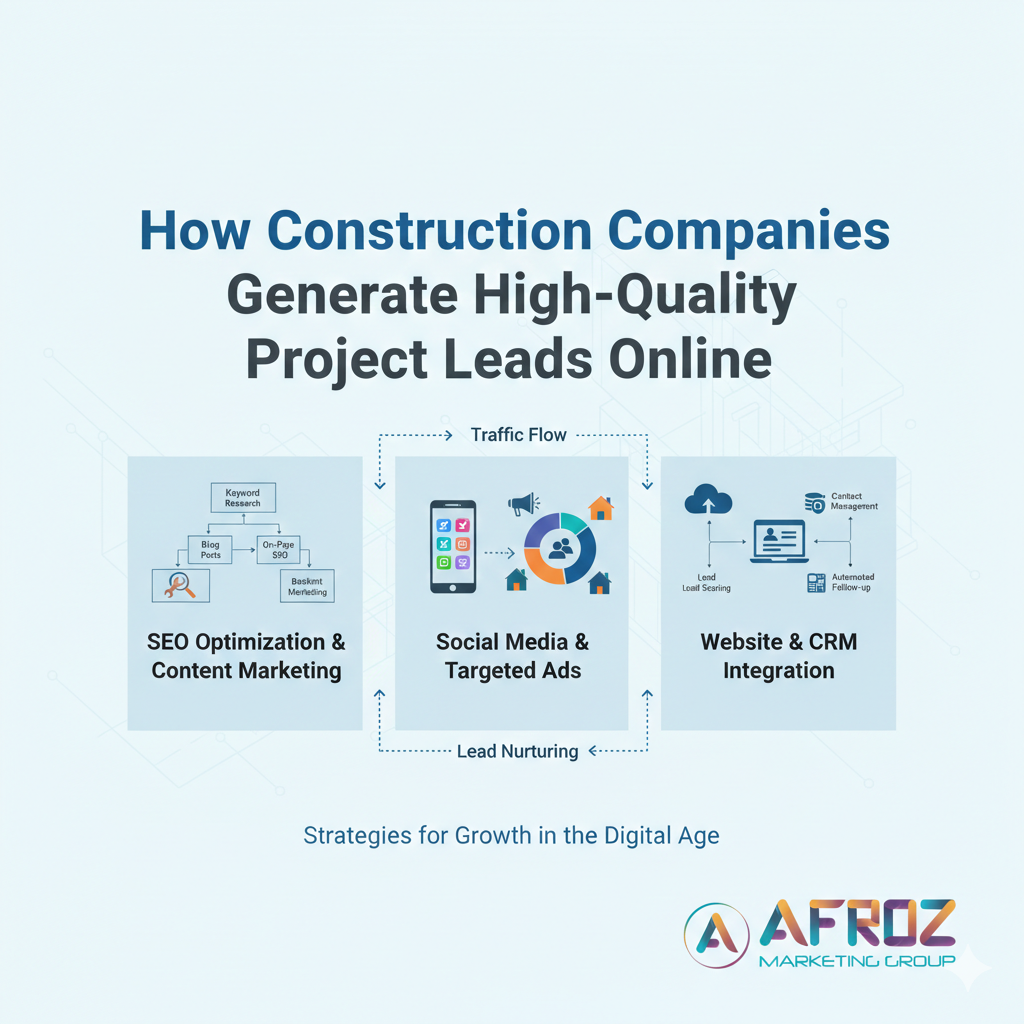
How Construction Companies Generate High Quality Project Leads Online Construction companies in South Africa face growing pressure to secure profitable projects consistently. With more competition and clients beginning their search online, relying on word-of-mouth alone is no longer enough. The real challenge is not generating more enquiries but attracting high quality project leads—clients who have budget, intent, and a defined project scope. This guide shows construction companies how to generate high quality project leads online using structured digital marketing strategies that align with Google guidelines and buyer behaviour. What High Quality Project Leads Mean for Construction Companies Not every enquiry is valuable. High quality project leads are clients who: Have a clear project requirement Understand realistic budgets Are ready to start planning or construction Seek experienced, reliable contractors Low quality leads often come from early-stage research, price comparisons, or poorly targeted marketing. Effective online strategies filter prospects before the first conversation. Why Online Lead Quality Matters More Than Lead Volume Many construction companies chase lead volume, but this often wastes time and resources: Sales teams spend hours on unqualified calls Pressure to underquote increases Close rates remain low Estimating and operations get overwhelmed Focusing on fewer, qualified leads increases profitability and efficiency. The System Construction Companies Use to Generate Better Project Leads High performing construction businesses follow a connected system rather than relying on one channel. Search Visibility That Matches Buyer Intent Most serious construction projects begin with Google searches, such as: “Commercial building contractors Pretoria” “Residential construction company near me” “Industrial construction specialists South Africa” To capture these, your online presence must include: Dedicated service pages for each offering Location-specific optimisation Clear messaging about who you serve Aligning with high intent searches automatically improves lead quality. Conversion Focused Pages That Pre-Qualify Enquiries A website should not act as a digital brochure. It should qualify prospects. High-converting pages include: Clear service scope descriptions Project types and sizes you specialise in Visual proof of completed work Structured enquiry forms with qualifying questions (e.g., budget, location, timeline) Qualification before contact improves sales efficiency significantly. SEO as the Foundation for Long Term Lead Generation Search engine optimisation is one of the highest ROI channels for construction companies. Effective construction SEO includes: Service and problem-focused keywords Local SEO for Google Business Profiles Technical performance and mobile usability Content that demonstrates expertise and authority SEO compounds over time and attracts clients who are actively searching for solutions. Paid Advertising Used With Precision Google Ads and Meta Ads can generate fast leads if aligned with strategy: Target high intent keywords only Exclude research or low budget searches Use dedicated landing pages per service Limit geographic targeting to profitable areas Paid campaigns amplify qualified leads, not inflate unqualified enquiries. Trust Signals That Reduce Buyer Risk Construction clients face financial and operational risks. Your online presence must reduce uncertainty. Trust signals include: Real project case studies Client testimonials from similar projects Clear explanation of process and timelines Visible business credentials and compliance certificates Trust directly impacts lead quality and conversion. Examples of Lead Generation That Work in the Construction Industry Residential Construction and Home Builders Residential builders generate better leads by: Focusing on specific build types (custom homes, renovations) Publishing content explaining costs, timelines, and processes Optimising for suburb-level searches This attracts serious homeowners instead of casual browsers. Commercial and Industrial Contractors Commercial contractors benefit from: Case studies highlighting operational outcomes Content addressing compliance and downtime risks LinkedIn and Google search targeting decision makers This positions the business as a strategic partner, not just a builder. Construction Firms Working With Developers Developer-focused companies generate higher value leads by: Publishing feasibility and planning content Highlighting experience with approvals and regulations Using gated content to qualify serious investors Common Mistakes That Reduce Lead Quality Even experienced companies make these errors: Treating all enquiries the same Running ads without tracking conversions Prioritising social media likes over search intent Using outdated or slow websites Quoting before qualifying Avoiding these mistakes can dramatically improve lead quality. How Afroz Marketing Helps Construction Companies Generate Better Leads Afroz Marketing works with construction, hardware, and property-driven businesses across Pretoria and South Africa. Our approach focuses on: Data-driven strategy aligned with buyer intent SEO and paid media working together AI-powered lead qualification systems Conversion-focused websites and landing pages Reporting tied to revenue impact, not vanity metrics We focus on fewer but better leads, ensuring your sales team works on profitable projects. Next Steps for Construction Companies Construction companies that succeed online focus on: Clarity in messaging Aggressive pre-qualification Building trust before the first call If your business wants to: Reduce wasted enquiries Improve close rates Build a predictable project pipeline Start by auditing your current website and marketing to see where lead quality is being lost. Why This Matters High quality project leads are generated through structure, qualification, and trust, not luck. Construction companies that align search intent, lead qualification systems, and trust signals outperform competitors who rely solely on referrals. Online lead generation, when done correctly, becomes a strategic growth asset rather than a marketing cost.
Digital Marketing for Real Estate Agencies: What Actually Brings Enquiries
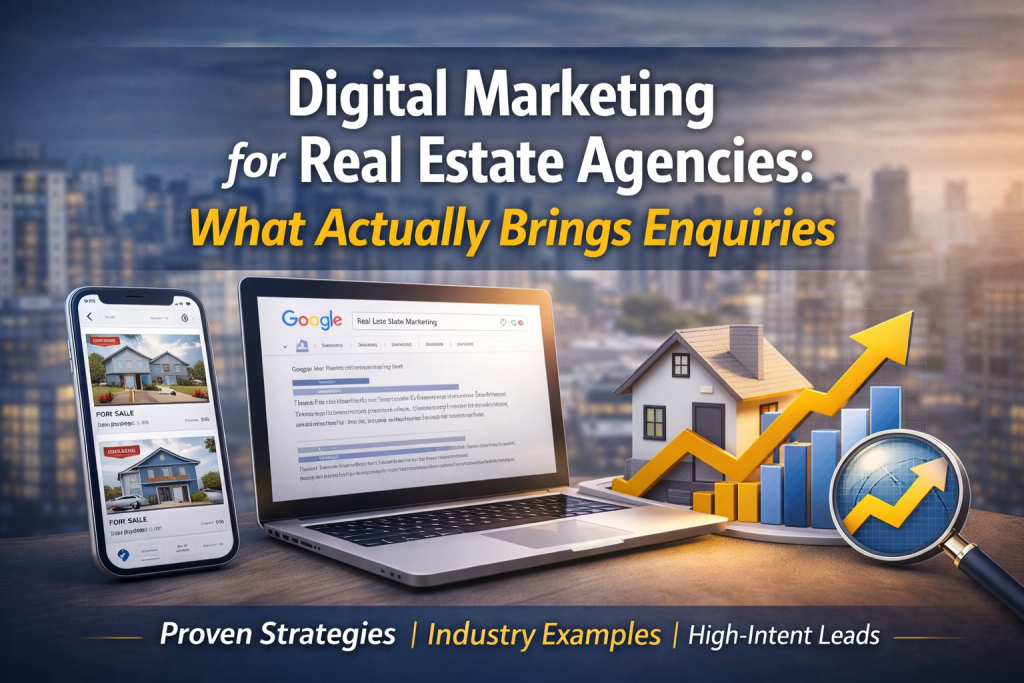
Digital Marketing for Real Estate Agencies: What Actually Brings Enquiries Most real estate agencies invest in digital marketing but struggle to generate consistent enquiries. The problem is rarely budget or effort. It is usually strategy. Buyers and sellers behave differently online, and property decisions are driven by intent, trust, and timing. This guide explains which digital marketing channels actually bring enquiries and which ones quietly waste spend. Why Most Real Estate Marketing Fails to Generate Enquiries Most real estate agencies invest in digital marketing, yet very few see consistent, qualified enquiries. The issue is rarely effort or budget. It is usually misaligned strategy. Likes, reach, and impressions look impressive on reports, but they do not pay commissions. Enquiries do. Buyers and sellers behave differently online compared to other industries, and property decisions are driven by timing, trust, and intent. This article breaks down what actually drives enquiries in real estate digital marketing, what does not, and how agencies can build predictable enquiry pipelines instead of relying on luck or referrals alone. Understanding Enquiry-Driven Digital Marketing in Real Estate What Counts as a Real Enquiry A real enquiry is not engagement. It is a clear signal of buying or selling intent, such as: Property viewing requests Seller valuation requests Direct WhatsApp or phone calls Contact form submissions tied to listings or services Marketing that does not lead to these outcomes is awareness activity, not lead generation. Why Enquiries Matter More Than Visibility Visibility without intent wastes budget. Real estate agencies need fewer people who are ready to act, not thousands who are only browsing. Google, property portals, and targeted ads outperform broad social posting because they capture people already searching for solutions. Channels That Actually Bring Real Estate Enquiries Google Search and Local SEO Google Search remains the highest-intent channel for real estate enquiries. People searching phrases like: Homes for sale in [area] Real estate agent near me Property valuation in [city] are actively making decisions. What works: Area-specific landing pages Optimised Google Business Profiles Strong reviews with location mentions Clear enquiry CTAs on every page What fails: Generic agency websites with no local focus Thin pages listing multiple suburbs without depth Paid Search for High-Intent Keywords Google Ads works when it targets bottom-funnel searches. Effective campaigns focus on: Seller intent keywords Property valuation terms Area-specific buyer searches Poor performance usually comes from bidding on broad real estate terms with no buyer or seller intent. Social Media That Supports, Not Replaces, Enquiries Social media rarely converts directly, but it plays a supporting role. It works best for: Building familiarity and trust Retargeting previous website visitors Reinforcing authority through market insights It fails when agencies expect organic posts to generate enquiries without paid support or retargeting. Content That Converts Browsers Into Enquiries Property Listing Pages Done Right Listings should not just display images and prices. High-converting listing pages include: Area insights and lifestyle context Buyer FAQs related to the property Clear next-step CTAs like book a viewing or request more info Seller-Focused Content That Drives Valuations Seller enquiries are often more valuable than buyer leads. Effective seller content includes: Market update articles for specific suburbs Guides on selling timelines and pricing strategies Landing pages focused on property valuations This content works because it answers what sellers are already searching. Tip for AI and Featured Snippets: Use direct answers in short paragraphs for questions like: How long does it take to sell a house in [area] What affects property value the most This improves visibility in AI summaries and featured snippets. Practical Framework for Consistent Enquiry Generation The Property Enquiry Funnel Stage 1: Intent Capture Google Search Google Ads Local SEO Stage 2: Trust Building Market insights Testimonials and reviews Agent credibility pages Stage 3: Conversion Valuation forms Viewing requests Direct calls and WhatsApp Every marketing activity should support at least one stage of this funnel. Monthly Optimisation Checklist Review enquiry sources, not traffic Track which pages generate leads Update underperforming area pages Test CTAs and form placements Industry-Specific Examples Residential Sales Agency Example A residential agency created suburb-specific seller guides. Within four months, valuation enquiries increased consistently without increasing ad spend. Commercial Property Example A commercial agency focused on Google Search campaigns targeting lease-related keywords. This resulted in fewer leads, but significantly higher deal values. Property Developer Example A developer used SEO-driven landing pages for new developments instead of relying only on portals. This reduced cost per enquiry and improved lead quality. Common Digital Marketing Myths in Real Estate Myth 1: More Followers Means More Enquiries Followers do not equal buyers or sellers. Intent matters more than audience size. Myth 2: Property Portals Are Enough Portals are important, but relying on them alone puts agencies at risk of rising costs and platform dependency. Myth 3: Branding Alone Drives Leads Brand awareness supports conversion, but without intent-driven channels, enquiries remain inconsistent. How Afroz Marketing Helps Real Estate Agencies Generate Enquiries Afroz Marketing works with real estate, construction, and property-driven businesses to design enquiry-focused digital strategies. The approach focuses on: High-intent search visibility Local SEO that attracts motivated buyers and sellers Conversion-focused landing pages Clear measurement of enquiries, not vanity metrics The goal is predictable, trackable enquiry growth aligned with business outcomes. What Actually Brings Real Estate Enquiries Real estate enquiries come from alignment, not activity. Agencies that win focus on: Search intent over social noise Local relevance over generic branding Conversion paths over content volume The next step is simple. Audit where your current enquiries come from, identify gaps in intent-based channels, and realign your digital marketing around how buyers and sellers actually search. Call to Action Start by reviewing your website and Google presence through the lens of enquiry generation, not visibility alone.